

By: Mark McCrindle
We are living in an era of increased scepticism. Amidst a sustained decline in institutional trust whether in government, media, or large corporations consumers are reconsidering where they place their confidence.
For marketing, branding and communications teams the key takeaway is clear, trust is shifting from faceless entities to relatable, authentic individuals.
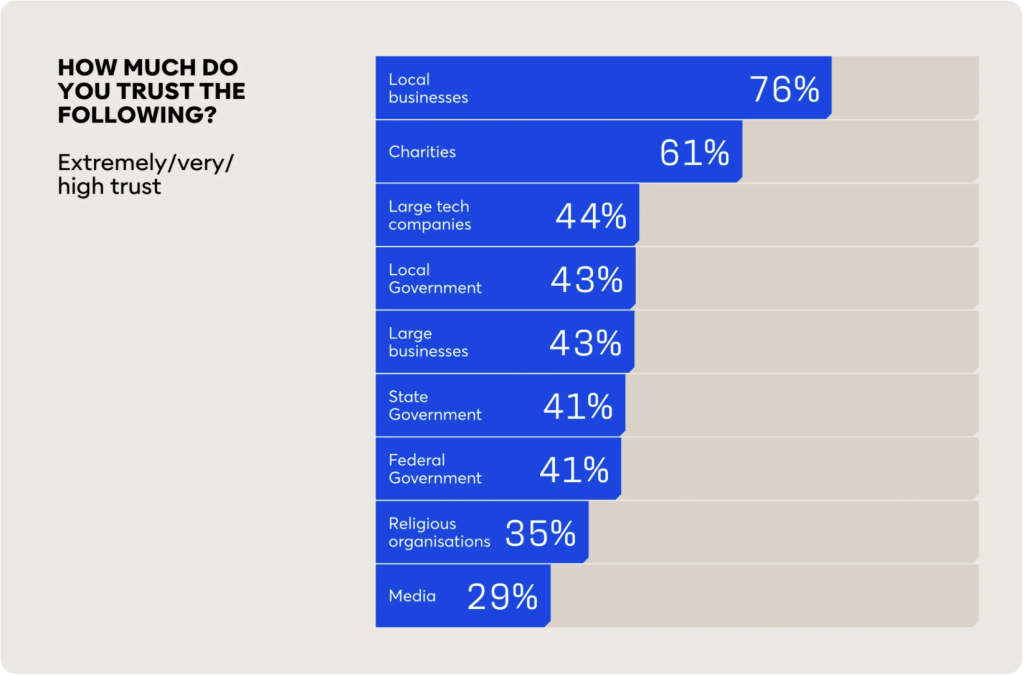
In this environment, a brand’s most valuable asset is no longer just its market dominance, but its personality and it’s human element. Brands must now move beyond merely selling a product to actively cultivating a relationship and injecting a soul back into the corporate narrative.
Shifting Trust to Leaders
As institutional trust wanes, the connection is sought elsewhere: in the human element. The perceived integrity and story of an organisation’s leader is becoming a decisive factor in brand engagement. More than half of Australians (56%) find trusting the organisation’s leader to be extremely or very important to their decision to engage. This is amplified among younger cohorts: Gen Z are 1.8 times more likely than Baby Boomers to see knowing the story and values of an organisation’s leader as extremely or very important (52% vs. 29%).
This generational demand for the human narrative necessitates an exploration to make organisational leaders visible and humanise the brand’s story. In a globally connected world, brand expression often trends towards safe and uniform. This corporate staleness stifles the sense of community and connection that consumers crave.
Engaging Brand Personalities
When consumers were asked which brand characteristics they look for, authenticity, consistency and transparency ranked highest. Although humour ranked lower there was an interesting difference between generations. Gen Z are 2.6 times more likely than Baby Boomers to look for humour when engaging with an organisation (27% cf. 11%). Gen Z especially have moved past corporate and vanilla language, and value humour and personality in a brand.
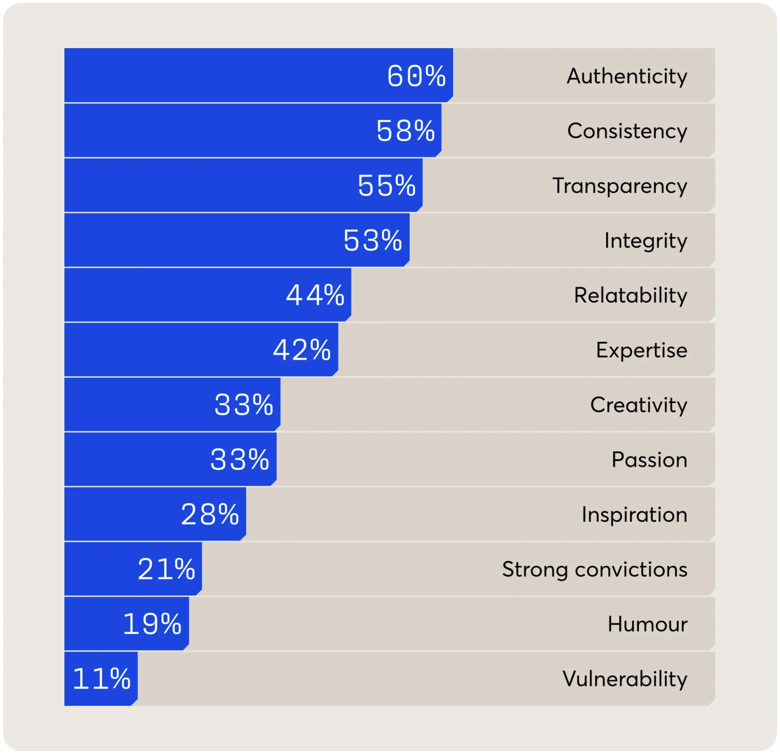
To overcome this, marketing teams can consider how they can strategically invest in differentiation. If integrity and transparency are the floor, then creativity and humour are the ceiling. Look for areas where brand expression is identical to competitors and inject creativity and uniqueness into the product design and customer experience. Use the brand personality to facilitate meaningful connection and community among customers.
Article supplied with thanks to McCrindle.
About the Author: McCrindle are a team of researchers and communications specialists who discover insights, and tell the story of Australians – what we do, and who we are.
Feature image: Canva